Magnet Strategy Advisory
End-to-end strategic advisory for organisations dependent on permanent magnet supply. We assess grade requirements, sourcing risk, and long-term procurement architecture.


Twin Pole Partners advises the engineering and procurement teams making it — grade selection, processing routes, sourcing strategy, localisation and recycling economics — with direct counsel from Dr R Gopalan.
Your motor is losing margin at temperature and you are being told to add dysprosium.
You have been quoted a grade and have no independent way to tell whether it is the right one.
You need a second source qualified before your current one becomes a single point of failure.
The magnet is the largest bill-of-materials risk in a programme you are costing.
You are weighing whether to bring magnet production in-house, or in-country.
You are assessing a supplier, a recycling route, or an acquisition target and need technical due diligence.
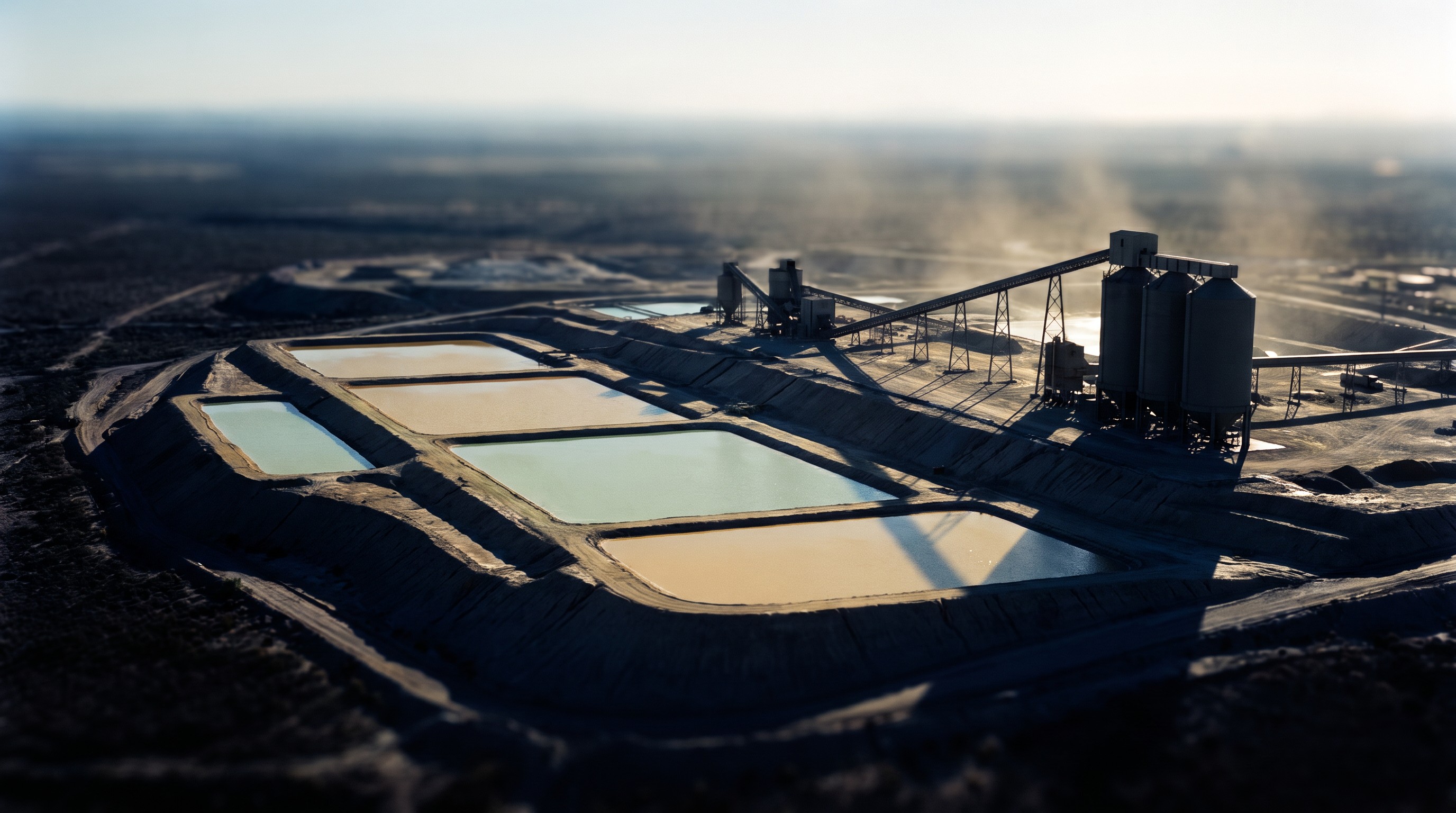
Monazite and bastnäsite carry a dozen rare earths at once. Separating neodymium and praseodymium from the rest is where most of the cost, and most of the concentration risk, actually sits.
From grade selection and processing routes to sourcing strategy — operating at the intersection of materials science, manufacturing economics, and industrial AI.
End-to-end strategic advisory for organisations dependent on permanent magnet supply. We assess grade requirements, sourcing risk, and long-term procurement architecture.
Process advisory across the full sintered-magnet route — strip casting, hydrogen decrepitation, jet milling, alignment and sintering, grain boundary diffusion, and post-sinter finishing — including Dy-lean and Dy-free coercivity routes.
Evaluation and qualification of emerging hard and soft magnetic materials against a real application envelope — SmCo, SmFeN, Mn-based and Dy-free NdFeB, soft magnetic composites and Fe-P alloys — with the trade-offs against cost, temperature and supply risk made explicit.
Real-time market intelligence on rare-earth oxide pricing, trade flows, supply disruption signals, and concentration metrics across 47 jurisdictions.
A permanent magnet synchronous traction motor carries roughly 1–2 kg of Nd-Fe-B per vehicle, before the thirty-odd other components — power steering, pumps, ABS, sensors, speakers — that each carry their own. Dr Gopalan's research addresses the traction magnet supply problem directly.
Actuation systems, turbine components, and defence electronics demand the highest-spec Sm-Co and Nd-Fe-B grades — materials Dr Gopalan developed for strategic applications.
Collaborative robots and servo motors require high-density, thermally-stable permanent magnets at scale.
Permanent magnet mass runs to roughly 650 kg/MW in low-speed direct drive, about 160 kg/MW at mid speed and around 80 kg/MW in high-speed geared designs — the drivetrain choice moves rare-earth exposure by a factor of eight before anyone negotiates a price. Offshore machines then run them in a salt-laden environment that puts coating and corrosion performance on the critical path.
Figures compiled September 2026 and attributed on each card. Where no sector-level magnet forecast exists from a source worth citing, an engineering figure is given instead. Analyst forecasts for the same segment routinely differ by a factor of two — treat any single number as an indication, and ask us for the workings before you plan against it.
Twin Pole gave us the confidence to renegotiate our sourcing contract six months before the market shifted. That's not something a market report gives you.
Dr Gopalan doesn't just know the chemistry — he knows the politics behind it. That combination is rare, and it's exactly what our board needed.
We came in looking for a grade recommendation. We left with an entire localisation roadmap.

INAE Fellow. PhD IIT Madras. 35+ years across DRDO, NIMS Japan and ARCI. 200+ publications, 14 patents, and 22 years on national mission programmes.
Book a consultation